Introduction: The Next 15 Years Will Rewrite Everything We Know About AI
How AI Research Will Look in 2040: What if the AI systems of 2040 could redesign themselves — without a single human engineer touching the code?
That’s not science fiction. It’s one of the most widely discussed predictions among researchers at MIT, DeepMind, Stanford, and OpenAI right now. We are living through what historians will likely call the most important technological transition in human history, and the pace is accelerating every single year.
By 2040, AI research won’t just be about building smarter chatbots or better image recognition tools. We’re talking about systems that can conduct their own scientific experiments, form hypotheses, and potentially solve problems in medicine, climate science, and physics — problems that have stumped humanity for centuries.
In this blog post, you’ll get a clear, well-researched breakdown of what AI research will actually look like in 2040, based on real predictions from the world’s leading scientists. Whether you’re a student, a professional, or just curious about where the world is heading — this is a picture you need to see.
READ MORE: What Is Artificial Intelligence? The Ultimate Beginner’s Guide for 2026

The Current State of AI Research: Where We Stand Today
Before we jump 15 years ahead, it helps to understand where we actually are right now.
As of 2025–2026, AI research is dominated by a few major areas:
- Large Language Models (LLMs) — AI systems trained on massive text datasets that can write, reason, and converse. Think of them as extremely sophisticated autocomplete engines that learned patterns from billions of documents.
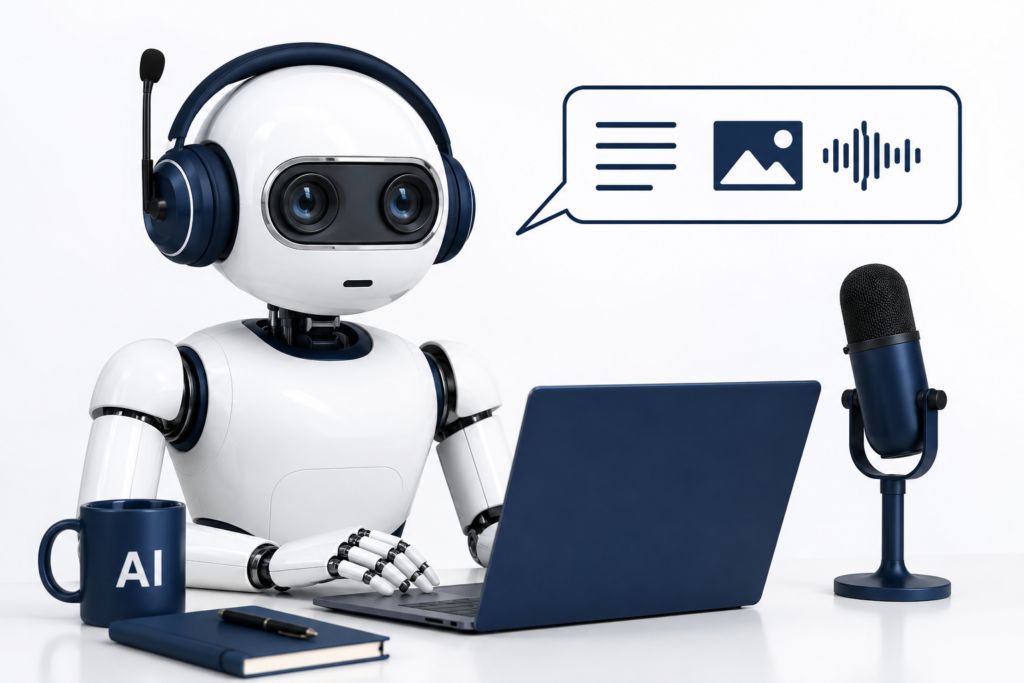
- Multimodal AI — Systems that process text, images, audio, and video simultaneously, the way humans naturally do.
- Reinforcement Learning — A training method where AI learns by trial and error, receiving rewards for correct behavior, much like how you’d train a dog.
- AI Safety Research — A growing field dedicated to making sure AI systems behave as intended and don’t cause unintended harm.
Progress in all of these areas has been staggering. But most researchers agree: what’s coming in the next 15 years will make today’s AI look like a pocket calculator.
KEY FACT: According to a 2024 survey of AI researchers published in AI Impacts, the median estimate for when AI systems might match human performance across most cognitive tasks is somewhere between 2040 and 2060 — a window we are rapidly approaching.
Prediction 1: AI Systems That Design and Train Themselves
One of the most radical predictions for 2040 involves what researchers call AutoML 2.0 or recursive self-improvement — AI systems that can redesign their own architecture and training process without human involvement.
Today, training an AI model requires teams of researchers to make thousands of decisions: how many layers to use, what learning rate to set, how to structure the data. It’s painstaking, expensive, and slow.
By 2040, scientists predict this entire pipeline will be automated. An AI system will observe its own performance, identify weaknesses, propose architectural changes, test them, and iterate — all autonomously.
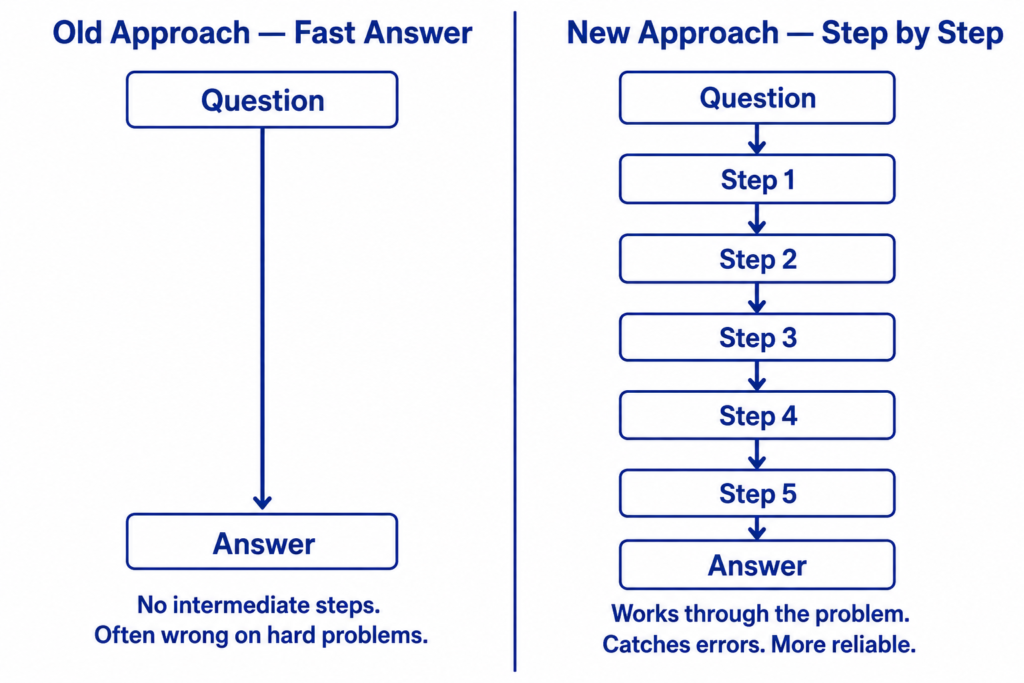
Here’s a simplified mental model of what that looks like:
Current AI Development Loop:
- Human researcher identifies problem
- Human designs model architecture
- Human prepares training data
- Model trains (weeks to months)
- Human evaluates results
- Human makes adjustments — go to step 2
Predicted 2040 Loop:
- Human states the goal
- AI system handles steps 2–6 autonomously
- Human reviews final output
PRO TIP: This doesn’t mean humans become irrelevant — it means the role of researchers shifts from building AI to directing AI. Understanding how to communicate goals clearly to AI systems will become one of the most valuable skills of the 2040 workforce.
Prediction 2: AI That Conducts Real Scientific Research
Perhaps the prediction that gets scientists most excited — and most nervous — is AI as an autonomous scientific researcher.
DeepMind’s AlphaFold already shocked the biology world by solving the protein-folding problem, a challenge that had stymied researchers for 50 years. That was a preview of what’s coming.
By 2040, researchers predict AI systems will:
- Generate novel scientific hypotheses based on patterns in existing research literature
- Design and simulate experiments before they’re run in a physical lab
- Interpret experimental results and suggest follow-up investigations
- Write peer-reviewed papers summarizing findings — with human researchers validating rather than creating
| Scientific Field | Predicted AI Role by 2040 | Expected Impact |
|---|---|---|
| Medicine | Drug discovery, disease modeling | Potentially cure diseases in months vs decades |
| Climate Science | Climate modeling, carbon capture design | Faster solutions to emissions problems |
| Physics | Theoretical hypothesis generation | Possible breakthroughs in quantum mechanics |
| Materials Science | New material discovery | Stronger, lighter, more efficient materials |
| Neuroscience | Brain mapping, cognitive modeling | Better treatments for neurological disorders |
WARNING: The speed of AI-driven scientific discovery creates serious ethical questions. If an AI discovers a powerful new pathogen treatment in six months instead of ten years, who owns that discovery? How do we verify it’s safe? These regulatory frameworks don’t fully exist yet, and that’s a problem researchers are actively flagging.
Prediction 3: The Rise of Embodied AI and Physical Robots
For most of AI’s history, the research has lived entirely in the digital world — text, images, data. By 2040, that changes dramatically.
Embodied AI refers to AI systems that exist in physical robots capable of navigating the real world, manipulating objects, and learning from physical experience the way humans and animals do. Today’s robots are mostly programmed for specific, repetitive tasks. The robots of 2040 will be general-purpose learners.
Researchers at MIT’s Computer Science and Artificial Intelligence Laboratory (CSAIL) have described a future where physical AI agents could:
- Assist elderly or disabled people with daily tasks — cooking, mobility, medication
- Conduct dangerous physical labor in environments hostile to humans, such as disaster zones or deep space
- Work alongside human surgeons in operating rooms, providing precision beyond human capability

The reason this is now plausible where it wasn’t before comes down to advances in three areas:
- Transformer-based world models — AI that can predict how the physical world will respond to actions
- Cheaper, more sensitive sensors — giving robots human-level or better spatial awareness
- Sim-to-real transfer — training robots in detailed virtual simulations and then deploying them in the real world
Prediction 4: Brain-Computer Interfaces and Neural AI
If self-improving AI is the prediction that excites engineers, then the convergence of AI with the human brain is the prediction that keeps philosophers up at night.
By 2040, researchers predict that Brain-Computer Interfaces (BCIs) — devices that create a direct communication channel between the human brain and digital systems — will be sophisticated enough to work with AI in real time.
What does that look like practically?
- A person thinks of a question — the AI answers directly in their field of vision via a retinal display
- A surgeon mentally controls a robotic arm with millimeter precision
- A person with paralysis types by thinking, at speeds matching normal typing
Researchers like Rafael Yuste at Columbia University have noted that this raises profound questions about where “the human” ends and “the AI” begins. That’s not a question we need to answer today — but it’s one AI researchers are already wrestling with.
KEY FACT: Neuralink reported in early 2024 that its first human patient was able to control a computer cursor with thought alone. By 2040, that technology is predicted to be 100x more capable and potentially non-surgical, using external wearable sensors instead of implants.
Prediction 5: AI Safety Becomes the Most Funded Research Area
Here’s a prediction that doesn’t get enough attention in popular media: by 2040, AI Safety research is expected to become the single most funded and staffed area in all of computer science.
The reason is straightforward. As AI systems become more capable and more autonomous, ensuring they do what we actually want them to do — and not something subtly different — becomes critically important.
Today’s AI safety research focuses on problems like:
- Alignment — making sure AI systems pursue goals that match human values, not just the literal instructions they’re given
- Interpretability — understanding why an AI made a particular decision, not just what the decision was
- Robustness — ensuring AI systems don’t fail dangerously when they encounter situations they weren’t trained on
- Oversight — designing systems where humans can monitor, correct, and shut down AI as needed
| Safety Research Area | Current Status (2026) | Predicted Status (2040) |
|---|---|---|
| Interpretability | Early-stage, limited tools | Mature field, deep model transparency |
| Alignment | Active research, unsolved | Core requirement for all deployed AI |
| AI Governance | National policies forming | Global regulatory frameworks established |
| Adversarial Robustness | Partially solved for narrow tasks | Broadly solved for most applications |
| Human Oversight Tools | Basic monitoring dashboards | Real-time behavioral auditing systems |
PRO TIP: If you’re looking for a career in AI that will still be growing in 2040, AI Safety and AI Ethics are among the most secure bets. These fields combine technical skills with philosophy, law, and social science — making them uniquely human-centric in a world of increasing automation.
Prediction 6: Multimodal and Multisensory AI Models
Today’s most advanced AI models can handle text, images, and audio simultaneously. By 2040, researchers expect this to expand dramatically — to include touch (haptics), smell, taste, and full spatial 3D environments.
This matters because many of the most important real-world tasks require integrating multiple sensory streams:
- A doctor doesn’t just look at a scan — they palpate tissue, listen to breathing, observe movement
- A materials engineer doesn’t just read data — they feel a surface, hear how it vibrates when struck
- A chef doesn’t just see a dish — they taste, smell, and adjust
Multisensory AI will allow systems to assist professionals in these domains in ways that text-only or vision-only AI simply cannot.
The underlying technology making this possible:
# Simplified pseudocode showing how a multisensory AI model
# might process inputs from multiple modalities

class MultiSensoryAI:
    def __init__(self):
        # Each modality has its own encoder that converts
        # raw input into a numerical representation (embedding)
        self.text_encoder   = TextEncoder()
        self.vision_encoder = VisionEncoder()
        self.haptic_encoder = HapticEncoder()   # Touch data from sensors
        self.audio_encoder  = AudioEncoder()

    def process(self, text=None, image=None, haptic=None, audio=None):
        embeddings = []

        # Convert each available modality into a shared embedding space
        # This lets the AI "combine" information from different senses
        if text:   embeddings.append(self.text_encoder(text))
        if image:  embeddings.append(self.vision_encoder(image))
        if haptic: embeddings.append(self.haptic_encoder(haptic))
        if audio:  embeddings.append(self.audio_encoder(audio))

        # Fuse all available modalities into a single representation
        fused = self.fusion_layer(embeddings)

        # Generate an output decision or prediction based on all inputs
        return self.decision_layer(fused)
The key concept here — embedding space — means converting very different types of data (pixels, sound waves, pressure readings) into the same mathematical format so the AI can process them together. Think of it as translating five different languages into one common language the AI understands.
Prediction 7: Open Source AI Research Democratizes Science
One prediction that often gets lost among the more dramatic ones: by 2040, the tools to conduct frontier AI research will likely be accessible to universities and research institutions worldwide, not just billion-dollar corporations.
Today, training the most powerful AI models requires access to thousands of specialized computer chips and hundreds of millions of dollars. That concentrates AI research in a very small number of organizations.
Researchers predict several forces will change this:
- More efficient training algorithms that achieve the same results with far less compute
- Distributed computing platforms that pool resources from thousands of smaller organizations
- Open-source foundational models that smaller teams can build on rather than build from scratch
This matters for global research equity. Right now, AI research is heavily concentrated in the US, UK, China, and a handful of other countries. By 2040, a university in Lagos, Karachi, or São Paulo should be able to contribute meaningfully to frontier research.
KEY FACT: Researchers at EleutherAI, Mistral, and various academic institutions have already demonstrated that open-source models can match or approach the performance of closed, proprietary models at a fraction of the cost. This trend is accelerating.
What Will AI Research Labs Look Like in 2040?
The physical and organizational structure of research labs is also expected to change significantly.
| Aspect | Today (2026) | Predicted (2040) |
|---|---|---|
| Team composition | Mostly engineers and data scientists | Multi-disciplinary: scientists, ethicists, domain experts |
| Experiment cycle | Weeks to months per experiment | Hours to days with AI assistance |
| Data requirements | Massive labeled datasets | Few-shot or self-supervised learning reduces data needs |
| Hardware | GPU clusters, expensive and centralized | Neuromorphic chips, cheaper and more distributed |
| Collaboration | Mostly within organizations | Global, cross-institutional, AI-facilitated |
| Publication speed | Months from research to paper | Real-time, continuously updated research outputs |

The Ethical Landscape of AI Research in 2040
No serious discussion of 2040 AI research predictions is complete without addressing the ethical dimensions. The scientists making these predictions aren’t naive — many of them are the loudest voices calling for caution.
Key ethical challenges the research community is actively working on:
- Bias amplification — As AI systems become more autonomous in research, will they amplify existing biases in scientific literature?
- Attribution and credit — If an AI discovers something, who gets the Nobel Prize?
- Access inequality — Will powerful AI research tools be available only to wealthy nations and institutions?
- Dual-use research — Knowledge generated by AI systems can be used for both beneficial and harmful purposes. How do we govern that?
- Environmental cost — Training large AI models consumes enormous energy. Will 2040’s more efficient models fix this, or will they just train at larger scale?
WARNING: Multiple prominent researchers — including Geoffrey Hinton, who won the Nobel Prize in Physics in 2024 for his foundational work on neural networks — have warned that the pace of AI capability development is outrunning the development of safety and governance frameworks. The predictions in this article assume that the research community takes those warnings seriously. That’s not guaranteed.
FAQ: AI Research in 2040
Q1: Will AI replace human researchers by 2040?
Almost certainly not by 2040, though AI will dramatically change what researchers do. The most likely scenario is that AI handles the labor-intensive parts of research — literature review, data analysis, hypothesis testing, initial experiment design — while human researchers focus on asking better questions, interpreting results in broader contexts, and making ethical judgments. Think of it less as replacement and more as a very powerful research assistant that never sleeps.
Q2: What programming languages and tools will AI researchers use in 2040?
Python is expected to remain dominant, though the way researchers interact with AI tools will likely shift toward natural language interfaces for many tasks. Specialized languages for quantum computing and neuromorphic hardware may also emerge. The bigger shift will be that researchers increasingly direct AI systems using high-level descriptions of goals rather than writing low-level code for every step.
Q3: How close are we to Artificial General Intelligence (AGI) by 2040?
This is the most debated question in the field. AGI — meaning AI that can match human performance across all cognitive tasks — is predicted by some researchers to arrive before 2040, by others not until the 2060s or beyond. The honest answer is: nobody knows with confidence. What most researchers agree on is that AI systems will be dramatically more capable in 2040 than today, regardless of whether we hit the formal threshold of AGI.
Q4: Which countries will lead AI research in 2040?
The US and China are expected to remain the largest players, but the gap is expected to narrow as open-source tools democratize access. The EU is investing heavily in AI research with a focus on safety and regulation. India, Canada, the UAE, and South Korea are also emerging as significant contributors. By 2040, AI research may be more globally distributed than it is today.
Q5: What skills should I develop now to work in AI research by 2040?
The skills that will matter most are: mathematical foundations (linear algebra, probability, calculus), programming (especially Python), understanding of machine learning principles, domain expertise in a specific field (medicine, climate, materials science), and critically — communication skills to work across disciplines and explain AI systems to non-technical stakeholders. The researchers of 2040 will be as much collaborators and communicators as they are technologists.
Q6: Will AI research in 2040 be regulated by governments?
Almost certainly yes, to a greater degree than today. The EU’s AI Act of 2024 was an early signal of global regulatory momentum. By 2040, most researchers predict there will be international governance frameworks for high-capability AI systems, similar to how nuclear research, aviation safety, and pharmaceutical trials are regulated today. Researchers themselves are largely in favor of sensible regulation — they understand the stakes better than anyone.
Wrapping Up: The Future Is Being Built Right Now
The predictions in this article come from real scientists doing real work today — and their most consistent message is that the window for shaping AI’s trajectory is now, not later. By 2040, the foundations will have been laid. The decisions made in the next 5–10 years about what to research, how to fund it, and what guardrails to build will determine whether the 2040 picture looks like an enormous leap forward for humanity — or a cautionary tale.
What’s clear is that AI research in 2040 will be faster, more collaborative, more interdisciplinary, and more powerful than anything we can fully imagine today. The researchers who thrive in that world are the ones getting curious and building skills right now.
If this article sparked questions for you, drop them in the comments below — I’d love to hear what aspects of 2040 AI research interest you most. Share this with someone who thinks AI is “just a chatbot thing,” and check out our guide on What Is Artificial Intelligence? The Ultimate Beginner’s Guide for 2026 to build your foundation from the ground up.

Author: AI Learner Tech
AI Learner Tech is a premier research and educational hub dedicated to mastering Artificial Intelligence, Machine Learning, and Computer Vision. We bridge the gap between complex academic theories and real-world industrial applications. Join our community to access high-quality tutorials, open-source projects, and expert insights. Website: ailearner.tech